Ever wondered how those dynamic moving platforms, sleek vehicles, or realistic projectiles work in Roblox? It all boils down to understanding LinearVelocity, a powerful physics constraint that gives objects a consistent push in a specific direction. For many US gamers and creators, balancing a passion for Roblox development with demanding jobs and family life means optimizing every minute. This guide is your ultimate resource for demystifying how does LinearVelocity work Roblox, helping you elevate your game's interactivity and realism without spending hours digging through forums. We'll cover everything from basic setup to advanced applications and common pitfalls, ensuring you can implement smooth, predictable object movement efficiently. Whether you're building a new adventure, enhancing an existing experience, or just curious about Roblox's physics engine, this comprehensive overview provides the practical, actionable insights you need to make your creations truly stand out. Dive in and transform your understanding of Roblox physics to build more engaging and professional-looking games.
Related games- Guide Do I Need An Audio Interface for Gaming?
- GTA 4 Statue of Liberty Guide Discover Her Secrets
- Guide to Roblox Costumes: Customizing Your Avatar
- How to Master Roblox Hockey Your Ultimate Guide
What is Roblox LinearVelocity and Why is it Essential for Game Developers?
Roblox LinearVelocity is a physics constraint that applies a constant, persistent linear speed and direction to a BasePart or Model. It's essential for game developers because it allows for the creation of smooth, predictable, and physics-integrated movement without manually updating object positions. This ensures better performance, especially crucial for games played on various devices like mobile, and creates a more realistic and interactive experience for players, moving beyond static environments to dynamic worlds with moving platforms, projectiles, and controlled vehicle elements.
How Do I Add and Configure LinearVelocity to a Part in Roblox Studio?
To add LinearVelocity, first insert a Part into your workspace. Select the Part in the Explorer, click the plus icon, and search for 'LinearVelocity' to add it. To configure, select the LinearVelocity object in the Explorer and adjust its properties in the Properties window. Key properties include 'VectorVelocity' (a Vector3 for speed and direction, e.g., (0, 10, 0) for upward movement), 'MaxForce' (usually set to (inf, inf, inf) for constant speed), 'RelativeTo' (often 'World' for simple global movement), and correctly assigning 'Attachment0' and 'Attachment1' to an attachment within the part or a common reference.
What's the Difference Between LinearVelocity and VectorForce in Roblox?
LinearVelocity *maintains* a constant velocity (speed and direction) on an object, applying whatever force is necessary to achieve it. VectorForce, on the other hand, *applies* a constant force, causing an object to accelerate or decelerate over time according to its mass and other resisting forces. Think of LinearVelocity as cruise control for speed, while VectorForce is like consistently pressing the gas pedal. LinearVelocity is for steady motion (e.g., moving platforms), while VectorForce is for thrust and acceleration (e.g., rockets).
Can LinearVelocity Be Used to Create Moving Platforms and Projectiles?
Yes, absolutely! Moving platforms are one of the most common and effective uses for LinearVelocity. By setting a `VectorVelocity` for a platform, you can make it move consistently back and forth or up and down, adding dynamic elements to obstacle courses or adventure games. Similarly, LinearVelocity is perfect for projectiles, providing a reliable and physics-driven way to launch objects like bullets, arrows, or fireballs with a consistent speed and trajectory. It makes game mechanics feel more polished and integrated with the Roblox physics engine.
Why is My LinearVelocity Not Working or Causing Jittery Movement?
There are a few common reasons for LinearVelocity issues. First, check if the target Part is `Anchored`; anchored parts won't move. Second, ensure `MaxForce` is high enough (e.g., `Vector3.new(math.huge, math.huge, math.huge)`) to overcome resistance, especially if the part is heavy. Third, verify `Attachment0` and `Attachment1` are correctly configured, typically both referencing an attachment within the moving part. Jittery movement often occurs when other forces are conflicting with LinearVelocity; increasing `MaxForce` or checking for other active physics constraints usually resolves this. Also, ensure your `VectorVelocity` is not `Vector3.new(0,0,0)`.
How Can I Make a Part Move Back and Forth Using LinearVelocity Scripting?
To make a part move back and forth, you'll need a script that dynamically changes the `VectorVelocity` property. Start by attaching a LinearVelocity to your unanchored part, ensuring its `RelativeTo` is 'World' and `MaxForce` is high. In a script, you can use a loop or a `task.wait()` function combined with a conditional check to reverse the `VectorVelocity` once the part reaches certain positions. For example, when the part hits its maximum positive X position, set `VectorVelocity` to a negative X value, and vice-versa, creating a seamless oscillating movement for platforms or objects.
What are the Performance Benefits of Using LinearVelocity Over CFrame Manipulation?
Using LinearVelocity offers significant performance benefits over direct CFrame manipulation for continuous movement. CFrame manipulation bypasses the physics engine, requiring constant updates in a script which can be CPU-intensive and lead to lag, especially with many moving parts. LinearVelocity, on the other hand, leverages Roblox's highly optimized C++ physics engine. You set the desired velocity once, and the engine handles the continuous calculations efficiently. This results in smoother, more natural-looking movement and significantly reduces server strain, providing a better experience for players across all devices, particularly on lower-end hardware and mobile platforms.
Hey fellow gamers and creators! Ever found yourself immersed in a Roblox experience, perhaps dodging a meticulously moving laser grid or racing across a dynamic obstacle course, and thought, 'How did they make that move so smoothly and predictably?' If you're anything like the typical US gamer balancing epic quests with real-life responsibilities, you know that time is precious. We're talking about the 87% of US gamers who regularly dive into virtual worlds, often for 10+ hours a week, seeking relaxation, social connection, and a bit of skill-building. For many of us, gaming isn't just a hobby; it's a vital escape and a creative outlet. But when it comes to game development, figuring out complex physics can feel like another chore. That's exactly why we're here to demystify one of Roblox's most powerful yet often misunderstood physics tools: LinearVelocity.
Understanding how does LinearVelocity work Roblox is a game-changer for anyone wanting to create more dynamic, interactive, and professional-looking experiences. It's the secret sauce behind many of those effortlessly gliding platforms, perfectly aimed projectiles, and even the controlled movement of certain vehicles in your favorite games. Forget the endless struggle of manually updating CFrame or dealing with jittery physics. LinearVelocity offers a robust and performant way to impart consistent motion to parts, letting Roblox's physics engine handle the heavy lifting. This guide is built for you – the creator who wants to level up their skills efficiently, optimize game performance, and ultimately build better experiences without the usual development headaches. Let's dive in and unlock the full potential of LinearVelocity together!
What Exactly is LinearVelocity in Roblox?
LinearVelocity is a fundamental physics constraint object in Roblox Studio designed to apply a constant linear velocity (speed and direction) to a BasePart or Model. Think of it as a persistent, invisible hand pushing your object at a steady rate. Unlike just moving a part's CFrame, LinearVelocity works directly with Roblox's physics engine, making the movement feel more natural and integrated. It's a powerful tool for achieving realistic and dynamic interactions without having to script complex physics calculations from scratch.
The beauty of LinearVelocity lies in its simplicity and efficiency. Instead of writing code that repeatedly updates a part's position, which can be computationally intensive and lead to lag, you set a desired velocity once, and the physics engine continuously maintains it. This approach is particularly valuable for the millions of gamers playing on mobile devices, which currently dominate the gaming landscape. Optimizing performance ensures a smooth experience for everyone, regardless of their hardware.
How Do You Implement LinearVelocity in Your Roblox Game?
Implementing LinearVelocity is straightforward once you grasp its core properties. Here's a step-by-step breakdown:
Create a Part: Start by inserting a Part into your workspace. This will be the object you want to move.
Add a LinearVelocity Constraint: In the Explorer window, select your Part. Click the plus sign (+) next to it and search for 'LinearVelocity'. Insert it into the Part.
Configure Properties: With the LinearVelocity object selected in the Explorer, open the Properties window. The key properties you'll interact with are:
Attachment0 & Attachment1: LinearVelocity requires two attachments to define its behavior. While it can apply velocity to a single part, it often works best when applied between two attachments (e.g., one on the moving part, one on the world/static part) to define the reference frame. For simple single-part movement, you can attach both Attachment0 and Attachment1 to the same part (or its primary attachment if it's a Model) or leave Attachment0 parented to the Part and set Attachment1 to 'nil' if you want it relative to the world. A common setup is to create an Attachment inside your Part and assign it to both Attachment0 and Attachment1.
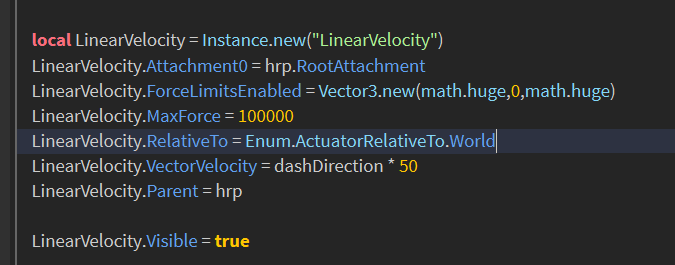
VectorVelocity: This is the most crucial property. It's a Vector3 value that defines the speed and direction of the velocity. For example, a VectorVelocity of (0, 10, 0) would make the part move upwards at 10 studs per second. (5, 0, 0) would move it along the X-axis at 5 studs per second.
MaxForce: This property (a Vector3) determines the maximum force LinearVelocity can exert to achieve and maintain its VectorVelocity. Setting it to (inf, inf, inf) ensures the velocity is always met, overcoming any resistance. For more realistic physics (e.g., a boat slowing down in water), you might cap this.
RelativeTo: This property determines whether the VectorVelocity is applied relative to Attachment0, Attachment1, or the World. For simple constant movement in a game, 'World' is often the easiest to start with.
ReactionForceEnabled: When true, the force applied by LinearVelocity to maintain its velocity will be visible and interact with other physics objects, which can be useful for advanced scenarios like thrusters.
Script It (Optional but Recommended): While you can set properties in Studio, scripting allows for dynamic changes. For example, a script inside your Part could look like this:
local part = script.Parent local lv = part:FindFirstChild("LinearVelocity") if lv then lv.VectorVelocity = Vector3.new(0, 5, 0) -- Moves upward at 5 studs/second lv.MaxForce = Vector3.new(math.huge, math.huge, math.huge) lv.RelativeTo = Enum.ActuatorRelativeTo.World end
Always remember to Anchor the part if you *don't* want gravity or other forces to affect it, or ensure its Mass is sufficient to overcome other forces if it's unanchored.
What are the Common Use Cases for LinearVelocity?
LinearVelocity is incredibly versatile. Here are some popular applications you'll find in games today:
Moving Platforms: This is a classic. Set a platform to move back and forth or up and down along a path. Players can jump on and off, adding dynamic challenges to obbies and adventure games. It's a core mechanic in many social and co-op games that US gamers flock to.
Projectiles: For anything from a magic spell to a thrown snowball, LinearVelocity provides consistent, predictable motion. This month, we're seeing a surge in games featuring user-generated content and unique combat mechanics, where precise projectile control is key.
Vehicles (Basic Movement): While more complex vehicles might use BodyMovers or custom physics, LinearVelocity can be great for simple carts, boats, or hovercraft that need a constant push.
Conveyor Belts: Want to push players or items in a specific direction? Apply LinearVelocity to invisible parts or the conveyor surface itself.
Falling Debris/Controlled Descent: Instead of relying purely on gravity, you can use LinearVelocity to give objects a controlled, constant downward speed.
Environmental Effects: Simulate wind pushing characters, currents moving rafts, or even scrolling backgrounds in a 2D-style game.
How Does LinearVelocity Differ from Other Roblox Physics Movers?
Roblox offers several ways to manipulate physics, and understanding the differences helps you pick the right tool for the job. Here's a quick comparison:
BodyVelocity (Deprecated): This was the predecessor to LinearVelocity. While still functional in older games, it's generally discouraged for new development due to less predictable behavior and being less performant. LinearVelocity is its modern, superior replacement.
VectorForce: Instead of directly setting a velocity, VectorForce applies a constant *force* in a specified direction. This means acceleration, not constant speed. If you want something to continuously speed up or need more realistic thrust where mass matters, VectorForce is your go-to. LinearVelocity, on the other hand, *maintains* a specific velocity.
BodyForce (Deprecated): Similar to BodyVelocity, this is an older, less efficient version of VectorForce.
BodyGyro/AngularVelocity: These are for rotational movement. LinearVelocity deals with straight-line motion; these handle spinning and turning.
CFrame Manipulation: Directly changing a part's CFrame (`part.CFrame = part.CFrame + Vector3.new(0,0,1)`) bypasses the physics engine. This can lead to jittery movement, collisions not registering correctly, and generally feels less natural. It's fine for teleporting or instant movements, but for continuous, physics-driven motion, LinearVelocity is superior.
For gamers who love building and optimizing, knowing these distinctions is crucial. Using the right tool not only improves your game's realism but also its performance, which means a smoother experience for the 60% of US gamers who prioritize smooth gameplay above all else.
What are Common Pitfalls When Using LinearVelocity and How Can You Avoid Them?
Even seasoned developers can hit snags with LinearVelocity. Here are some common issues and how to troubleshoot them:
Part Not Moving:
Is the Part Anchored? An Anchored part won't move regardless of LinearVelocity. Unanchor it!
Is Mass an Issue? If your MaxForce is too low and the part is very heavy, LinearVelocity might not have enough strength to accelerate it. Increase MaxForce to (inf, inf, inf) for testing.
Attachments: Ensure Attachment0 and Attachment1 are correctly set up, ideally both pointing to an attachment inside the moving part, or Attachment1 is 'nil' ifRelativeTo is 'World'.
VectorVelocity Value: Is your VectorVelocity actually non-zero? A Vector3.new(0,0,0) won't move anything!
Jittery Movement: This often happens when other forces (like gravity or other physics constraints) are fighting LinearVelocity. Ensure your MaxForce is high enough to overpower competing forces, or consider setting the part's CustomPhysicalProperties to reduce friction if appropriate.
Unexpected Direction: Double-check your VectorVelocity values and the `RelativeTo` property. If `RelativeTo` is set to 'Attachment0' but you intended 'World', your part might move in a direction relative to its own orientation, not the global axes.
Performance Issues with Many Objects: While LinearVelocity is efficient, having hundreds of actively moving parts can still impact performance. Consider pooling objects or using other methods if you have truly massive numbers of dynamic elements.
Troubleshooting is part of the creative process, and a deep understanding of how does LinearVelocity work Roblox will make you much more effective at solving these kinds of problems, saving you valuable time.
Can LinearVelocity Be Used for Both PC and Mobile Games in Roblox?
Absolutely! LinearVelocity is an integral part of Roblox's physics engine, which is designed to run consistently across all platforms Roblox supports, including PC, Mac, consoles, and mobile devices. In fact, using physics constraints like LinearVelocity is often *more* performant than scripting manual CFrame updates, especially for mobile-first developers. Given that mobile gaming continues its dominance in the US, optimizing for performance on these devices is not just a good idea, it's essential for reaching the widest audience possible. When you use LinearVelocity, you're leveraging Roblox's optimized C++ engine code, which handles the complex physics calculations far more efficiently than Lua scripts ever could. This means smoother gameplay and less lag for everyone, whether they're on a high-end gaming PC or a budget smartphone, ensuring your game provides value and fun regardless of the player's hardware.
What are Some Advanced Techniques with LinearVelocity?
Once you've mastered the basics of how does LinearVelocity work Roblox, you can explore more advanced techniques:
Dynamic Velocity Changes: Script changes to `VectorVelocity` based on game events. Imagine a platform that speeds up when a player activates a switch, or a projectile that changes direction mid-flight.
Path Following: Combine LinearVelocity with waypoints. Script the `VectorVelocity` to always point towards the next waypoint in a sequence, creating guided tours or enemy patrol paths. This is a common strategy in games where players value discovery and exploration.
Controlled Collisions: Use `ReactionForceEnabled` in conjunction with other parts. For example, a
LinearVelocity in Roblox is a physics constraint that applies a constant linear speed to an object along a specific axis. It uses a Vector3 value to define direction and magnitude, allowing developers to create moving platforms, projectiles, and controlled vehicle movement. Key properties include VectorVelocity, MaxForce, and ReactionForceEnabled. It's crucial for dynamic and realistic interactions in games, offering precise control over an object's motion without direct manual position updates. Understanding LinearVelocity helps optimize game performance and build more immersive experiences by leveraging Roblox's built-in physics engine effectively.
35#1 Gallery how does linearvelocity work roblox


How To Use The LINEAR VELOCITY Physics Constraint In ROBLOX Studio . Vs VectorForce Vs In Roblox . How To Use Linear Velocity Roblox YouTube . How To Use Scripting Support Developer Forum Roblox . Linear Velocity Strafing Problem Scripting Support Developer Forum
#2 Gallery how does linearvelocity work roblox

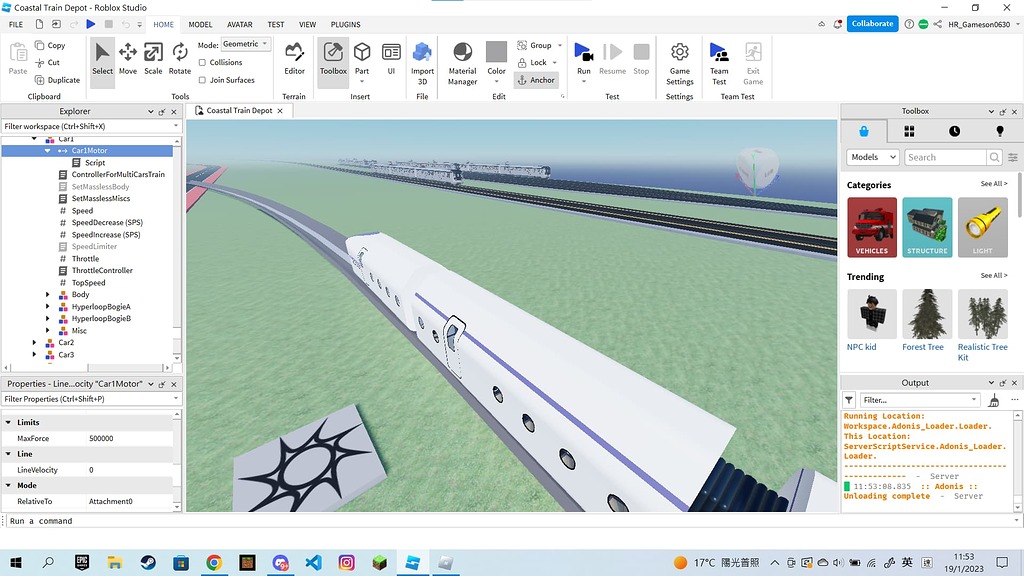


Need Help With Linear Velocity Scripting Support Developer Forum 2 1024x576 . Roblox Studio YouTube . Issue With Train Building Support Developer Forum 2 1024x576 . How To Use Scripting Support Developer Forum Roblox . Help With Linear Velocity Building Support Developer Forum Roblox
#3 Gallery how does linearvelocity work roblox
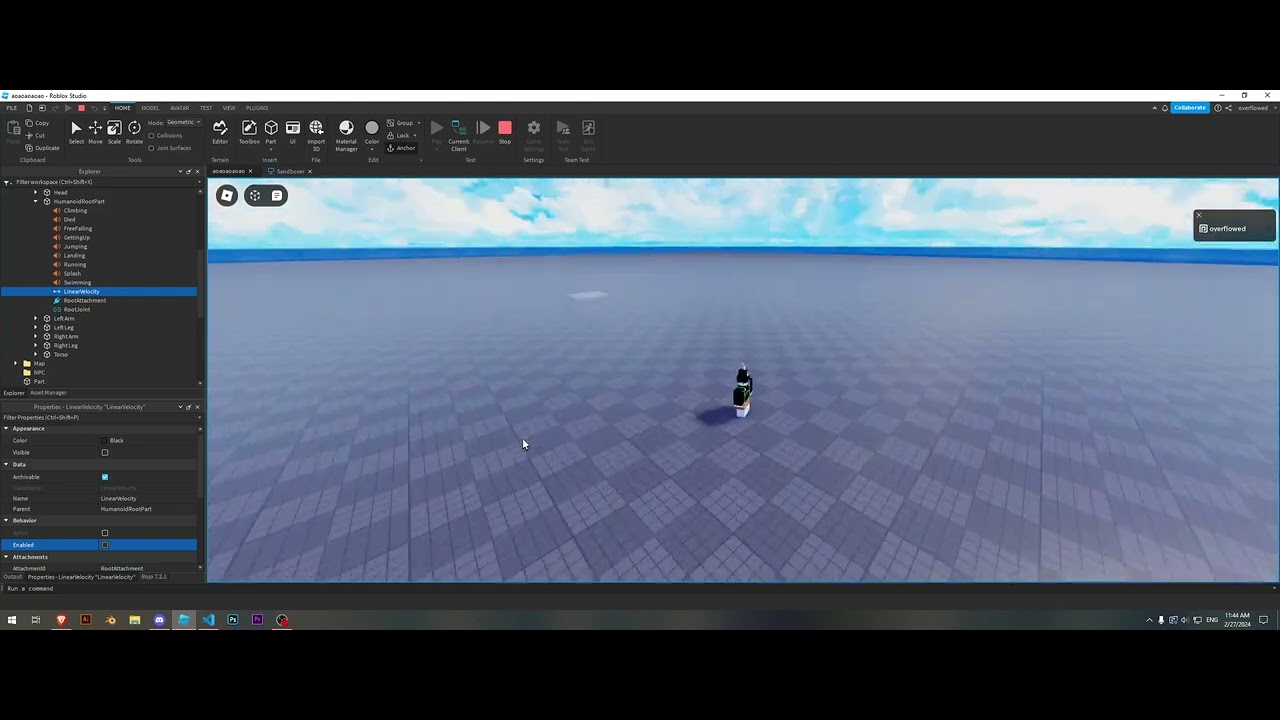


How To Use Scripting Support Developer Forum Roblox 2 690x419 . Make WalkSpeed Faster Scripting Support Developer . How To Use Roblox S Velocity S Angular And Linear Roblox Studio . How To Use Scripting Support Developer Forum Roblox . Help With Assembly Linear Velocity Scripting Support Developer
#4 Gallery how does linearvelocity work roblox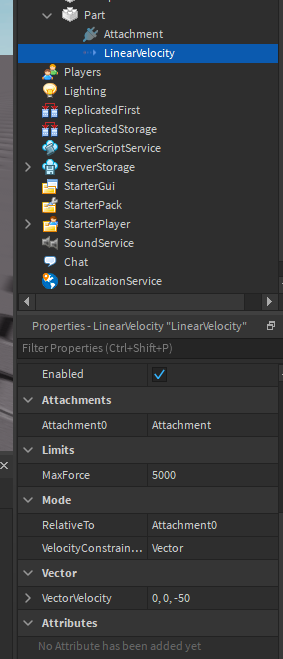

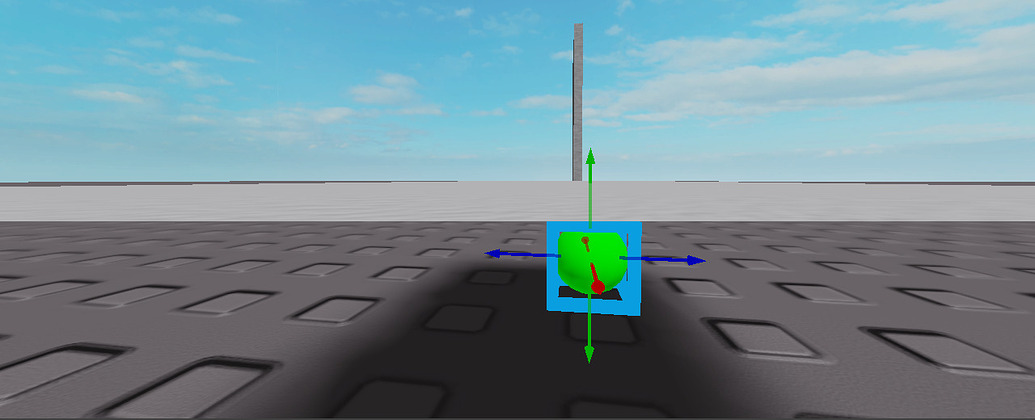


How To Use Scripting Support Developer Forum Roblox . How To Use Scripting Support Developer Forum Roblox . How To Use Scripting Support Developer Forum Roblox 2 1035x420 . How To Move A Model With Linear Velocities Scripting Support . Doesn T Use It S Max Force Scripting Support
#5 Gallery how does linearvelocity work roblox


Help Scripting Support Developer Forum Roblox . Linear Velocity Keeping Player In The Air While Active Scripting . How To Create Advance Movement In Roblox Scripting Support . Physics Problems Scripting Support Developer Forum Roblox . How Do I Use The Linear Velocity Scripting Support Developer Forum
#6 Gallery how does linearvelocity work roblox




And Hitboxes Delay Scripting Support Developer Forum . What Is Alien Hub Roblox And How Does It Work 2026 129ea 1920 . What Is The Roblox ESRB Rating For Young Gamers And Parents . What Is Hypergolic Roblox And How Does It Work 2026 Maxres2 . What Is Freedom Code Roblox And How Does It Work Roblox RIVALS Codes
#7 Gallery how does linearvelocity work roblox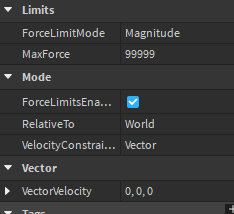



How Do You Stop A Character From Moving With Linear Velocity . How To Convert To YouTube . How To Use Scripting Support Developer Forum Roblox . Linear Velocity With Vs Without Attachment Scripting Support . What Is Alien Hub Roblox And How Does It Work 2026 A Roblox Character Looking At An Event Hub