Navigating the complexities of Roblox game development often feels like a balancing act, especially for adult gamers who juggle careers, families, and limited free time. This comprehensive guide to printf Roblox aims to demystify one of the most fundamental yet powerful debugging tools available in Roblox Studio. Many creators, even those with years of experience, sometimes overlook the simplicity and effectiveness of using printf, or its Lua equivalent, print, to troubleshoot their scripts. This resource is designed to provide practical, actionable insights, helping you pinpoint issues in your game logic, track variable states, and ensure your creations run smoothly without unexpected glitches. Whether you are a hobbyist developer creating an escape game for friends or an experienced scripter optimizing a complex social hub, understanding how to effectively use printf in Roblox is crucial for enhancing your workflow. We will cover everything from basic syntax to advanced debugging strategies, ensuring your development process is more efficient and your gaming projects are polished and enjoyable for players. Stay current with essential development techniques without the hype, focusing on real-world solutions that save you time and frustration.
What is printf Roblox and why is it important for game developers?
When developers refer to 'printf Roblox', they are usually talking about Lua's built-in print() function. This function allows you to output messages, variable values, or debug information directly to the Output window in Roblox Studio. It's crucial because it provides immediate feedback on script execution, helping you track logic, identify errors, and understand exactly what your code is doing behind the scenes, making debugging faster and more intuitive for busy creators.
How do I use the print() function in Roblox Studio for basic debugging?
To use print(), simply type print("Your message here") or print("Variable value:", myVariable) within your script. When the script runs, the message and any variable values will appear in the Output window (accessible from the 'View' tab in Roblox Studio). This allows you to quickly verify if your code paths are being hit, what values variables hold at specific points, and to pinpoint where your game logic might be going wrong.
Can printf Roblox help me troubleshoot performance issues in my game?
Yes, 'printf Roblox' (via print()) can indirectly help with performance troubleshooting. By printing timestamps (using tick() or os.clock()) before and after sections of code, you can measure the execution time of specific functions or operations. This helps identify 'bottlenecks' – parts of your script that are taking too long to run and potentially causing lag or frame drops in your game, allowing you to optimize those areas for smoother gameplay.
What are some common mistakes to avoid when using print() for debugging in Roblox?
A common mistake is leaving excessive print() statements in your final published game, which can clutter the console for players or even slightly impact performance. Another is not being descriptive enough with your print messages, making it hard to understand the context of the output. Always remove or comment out debugging prints before publishing, and include clear labels (e.g., "Player health check:") with your variable outputs to make them more useful.
Are there more advanced debugging tools in Roblox Studio beyond print()?
Yes, beyond the simple print(), Roblox Studio features a powerful built-in Script Debugger. This tool allows you to set breakpoints, step through your code line by line, inspect and modify variable values during execution, and view the call stack. While print() is excellent for quick checks, the Script Debugger is indispensable for deep dives into complex, elusive bugs, offering a more controlled and detailed debugging experience for dedicated developers.
How can I effectively debug issues related to Roblox's client-server model using print()?
When debugging client-server interactions, it's crucial to differentiate output. Use distinct messages like print("[SERVER]: Player joined") in server scripts and print("[CLIENT]: UI loaded") in local scripts. This clarifies whether the code is executing on the server or the player's client, helping you track data flow and synchronize events across the network, which is vital for smooth multiplayer experiences in Roblox.
Why should I remove or comment out my print() statements before publishing my Roblox game?
You should remove or comment out print() statements before publishing your Roblox game primarily to prevent console clutter for players and minimize any potential minor performance overhead. Excessive prints can also inadvertently reveal internal game logic or data that you might not want exposed. A clean console ensures players have a smoother, less distracting experience, and your game's integrity is maintained.
For many adult gamers, our free time is a precious commodity. We spend our days balancing work, family, and life's endless demands, often looking forward to those moments we can unwind with a great game. But what happens when that relaxation turns into frustration, not as a player, but as a creator trying to build something fun in Roblox? You've spent hours coding, testing, and refining, only to hit a wall with an elusive bug. Your game isn't behaving as expected, and you're staring at lines of code, wishing you had a crystal ball to see what's really going on inside your script. This is a common pain point for countless developers, from seasoned pros to weekend warriors.
That's where a simple yet incredibly powerful tool comes into play:
printf roblox
, or more commonly known as theprint() function in Lua. While not a direct printf like in C or Python, Lua's print() serves the exact same purpose, allowing you to output information directly from your scripts to a console or output window. This seemingly basic function is your best friend when it comes to debugging. Instead of guessing, you can make your script tell you exactly what's happening, what values variables hold, and where your code might be taking an unexpected turn. With 87% of US gamers regularly engaging with titles and many spending 10+ hours a week, efficiency in development is key to making the most of your creative time, especially when mobile gaming continues its dominance and social play is paramount. This guide is crafted for you, the busy gamer-developer, to simplify your debugging process and get your Roblox creations running smoothly.What Exactly is printf Roblox and Why Do I Need It?
In the context of Roblox, when developers talk about
printf roblox
, they are almost always referring to Lua's built-inprint() function. This function allows you to display text, numbers, variables, or any other data type to the Output window in Roblox Studio while your game is running or when a script executes. Think of it as your script's way of talking to you, letting you peek behind the curtain of its execution. You need it because it is the most direct and often the quickest way to diagnose problems, understand complex logic flows, and verify that your script is doing what you expect it to. It's like having a debugger's microscope, but without the steep learning curve of more advanced tools. It helps you save precious development time, letting you get back to enjoying games or spending time with family, rather than chasing phantom bugs.How Do I Use the print() Function Effectively in Roblox Studio?
Using print() in Roblox Studio is straightforward. You simply call the function and pass whatever values you want to see as arguments. These can be strings, numbers, booleans, or even tables (though tables will print their memory address by default unless formatted). The output will appear in the 'Output' window, which you can usually find in the View tab of Roblox Studio. For example, print("Hello, World!") will display "Hello, World!" while print("Player score: ", score) will show a message followed by the current value of the 'score' variable. Best practice involves printing descriptive messages alongside variables to clearly understand the context. For busy developers, quick diagnostics mean more time for actual gameplay or family. This direct feedback loop is invaluable for those who value efficiency in their creative pursuits, ensuring they can make the most of their limited development windows.
What are the Common Use Cases for print() in Roblox Scripting?
- Tracking Variable Values: Ever wonder why a character's health isn't updating? Print its health value at different stages of your script to see exactly when and why it changes (or doesn't). For example:
print("Current Health: ", player.Character.Humanoid.Health). - Monitoring Script Flow: Place
print()statements at the beginning and end of functions, or after conditional statements, to confirm that your code is executing in the intended order. This is incredibly helpful for complex logic or event-driven systems. - Debugging Loops and Iterations: Inside loops, printing the iteration count or key values can help identify infinite loops or incorrect loop conditions. A simple
print("Loop iteration: ", i)can save hours. - Event Handling Verification: Confirming that events are firing correctly and that their listeners are responding as expected is vital. Print a message when an event is triggered to ensure connectivity.
- Understanding Network Replication: For multiplayer games, differentiating between server-side and client-side execution can be tricky. Use
print()on both sides with identifying labels (e.g.,print("[SERVER]: Player joined")vs.print("[CLIENT]: UI loaded")) to see what's happening where.
These applications make print() an indispensable tool for maintaining clarity in your scripts, allowing you to quickly diagnose and fix issues without getting bogged down in complex debugging environments. It's about working smarter, not harder, which resonates with 2026's tech-savvy gamers balancing multiple responsibilities.
Are There Any Alternatives or Advanced Techniques for Debugging in Roblox?
While print() is the workhorse, Roblox Studio offers more advanced debugging tools. The built-in **Script Debugger** allows you to set breakpoints, step through code line by line, inspect local and global variables, and even modify values on the fly. This is incredibly powerful for complex bugs, similar to what you might find in a professional IDE. To access it, go to the 'Test' tab in Studio and click 'Run' (not 'Play'), then use the debugger controls. However, the learning curve can be steeper for casual developers. For quick checks, warn() and error() functions also output to the console but format messages differently; warn() shows a yellow warning, and error() stops script execution with a red error message. Understanding these options empowers you to choose the right tool for the job, saving time for your actual gaming or family activities.
How Does print() Help with Performance Optimization in Roblox Games?
While print() itself isn't a performance tool, it's instrumental in identifying bottlenecks. You can use it to log timestamps at different points in your code to measure how long certain operations or functions take to execute. For example, by printing tick() (which returns the current time in seconds) before and after a heavy computation, you can calculate the elapsed time. If a function consistently takes too long, that's a prime candidate for optimization. This approach is particularly useful in identifying scripts that might be causing lag or frame drops, which directly impacts player experience. Gamers in 2026, especially those on mobile, expect smooth performance. By pinpointing performance hogs, you can optimize your game to run more efficiently, ensuring a better experience for your players and avoiding common pain points that drive users away from otherwise great creations.
Can I Use printf Roblox to Share Debugging Information with Others?
Absolutely! The output generated by print() statements is visible in the Output window within Roblox Studio for anyone testing the game. If you're collaborating with a team or seeking help from a mentor, sharing screenshots or logs from your Output window can be an invaluable way to communicate debugging information. When a player encounters an issue in a live game, if you have robust logging (perhaps saving print output to a server for later review), it can provide crucial insights for post-launch debugging. However, remember to remove or comment out excessive print statements before publishing your game, as they can clutter the console and potentially expose sensitive information. Thoughtful logging allows you to troubleshoot remotely, a huge benefit for busy individuals who might not have synchronous development time with collaborators. This aligns with social gaming trends where collaboration is key.
Why is Consistent Debugging Critical for a Game's Success and Player Retention?
Consistent debugging, facilitated by tools like
printf roblox
, is paramount for success in the competitive Roblox ecosystem. A buggy game frustrates players, leading to negative reviews, fewer visits, and ultimately, a decline in player retention. Think about it: when you're looking to unwind with a game, you want it to work seamlessly. A broken mechanic or a crashing script disrupts that experience. By actively debugging, you ensure a polished, reliable experience that keeps players engaged and coming back. This is especially true in 2026, where players have countless options, from free-to-play social hubs to immersive VR experiences. A smooth, bug-free game speaks volumes about the creator's dedication and professionalism, building trust and fostering a loyal community. It's about respecting your players' time and providing the quality they expect, which directly contributes to your game's longevity and success, enabling you to build skills and friendships online without technical headaches.How Do Popular Roblox Developers Use Debugging in Their Workflow?
Top Roblox developers integrate debugging as an inherent part of their development cycle, not an afterthought. They use print() for quick sanity checks during initial coding, verifying assumptions and data states. As modules become more complex, they employ the built-in debugger for deeper analysis, stepping through functions and examining call stacks. Many also implement sophisticated logging systems that go beyond simple print() calls, saving detailed event data to external services for post-mortem analysis of live game issues. They often use conditional print() statements that only activate in a development environment, preventing clutter in public versions. This proactive approach ensures their games are robust and performant, maintaining the high standards that attract and retain millions of daily active users. It's a mindset of continuous improvement, crucial for staying current in a fast-evolving platform like Roblox and creating experiences that resonate with a global audience.
FAQ Section
What is the difference between print and warn in Roblox Lua?
Both print() and warn() output messages to the Output window. The primary difference is how they are displayed: print() shows a standard black text message, whereas warn() displays a yellow-highlighted message, indicating a warning. Functionally, they are similar, but warn() is often used for non-critical issues that developers want to highlight without stopping script execution.
Can I use print() to debug client-side scripts in Roblox?
Yes, print() works equally well for both server-side (Script) and client-side (LocalScript) code in Roblox. When used in a LocalScript, the output will appear in the developer's client-side Output window. This is crucial for debugging UI interactions, player input, and other client-specific logic.
Will excessive print() statements slow down my Roblox game?
While a few print() statements generally have negligible impact, an extremely large number of print calls, especially inside very fast loops or frequently firing events, can potentially introduce minor performance overhead due to the constant writing to the Output window. It's best practice to remove or comment out debugging prints once the issue is resolved, particularly before publishing your game.
Is there a way to filter print messages in the Roblox Output window?
Yes, the Roblox Studio Output window has a filter bar at the top. You can type keywords or phrases there to filter messages, making it easier to find specific debugging outputs in a cluttered console. This is a very useful feature for managing extensive logging from complex games and focusing on relevant information.
Can print() show me the type of a variable in Roblox?
Yes, you can use the type() function alongside print() to determine a variable's data type. For example, print("Variable type:", type(myVariable)) will output whether myVariable is a "string", "number", "boolean", "table", etc. This is useful for type checking and ensuring functions receive expected arguments.
How do I clear the Roblox Studio Output window?
You can clear the Output window by clicking the 'Clear Output' button, which looks like a trash can icon, located in the top-right corner of the Output window. This helps in decluttering the console and focusing on new debugging messages.
So, there you have it. The humble print() function, often underestimated, is truly a cornerstone of efficient Roblox game development. It's your direct line of communication with your scripts, allowing you to solve problems faster, build better games, and get back to enjoying your limited free time. For busy adult gamers balancing life's demands, efficiency and effective problem-solving are paramount. By mastering this basic tool, you're not just fixing bugs; you're building confidence, honing your skills, and ensuring your creative visions in Roblox come to life beautifully. What's your biggest Roblox debugging challenge? Comment below and share your best print() tips!
Essential debugging for Roblox Studio; Outputting values and tracking script execution; Simple yet powerful troubleshooting tool; Improves game development efficiency; Key for understanding game logic.
34

How To Add People Roblox Easily Your 2026 Guide . Definitive Guide To Roblox 2026 TM 07169 Definitive Guide To Roblox 2026 . The Definitive Guide To Roblox Annual 2026 Phillips Toys 61HEet5s7ML 1445x . 100 Unofficial Roblox Annual 2026 SL1000 1024x . Roblox 2026 Logo REVEALED New Color New Look YouTube Maxres2


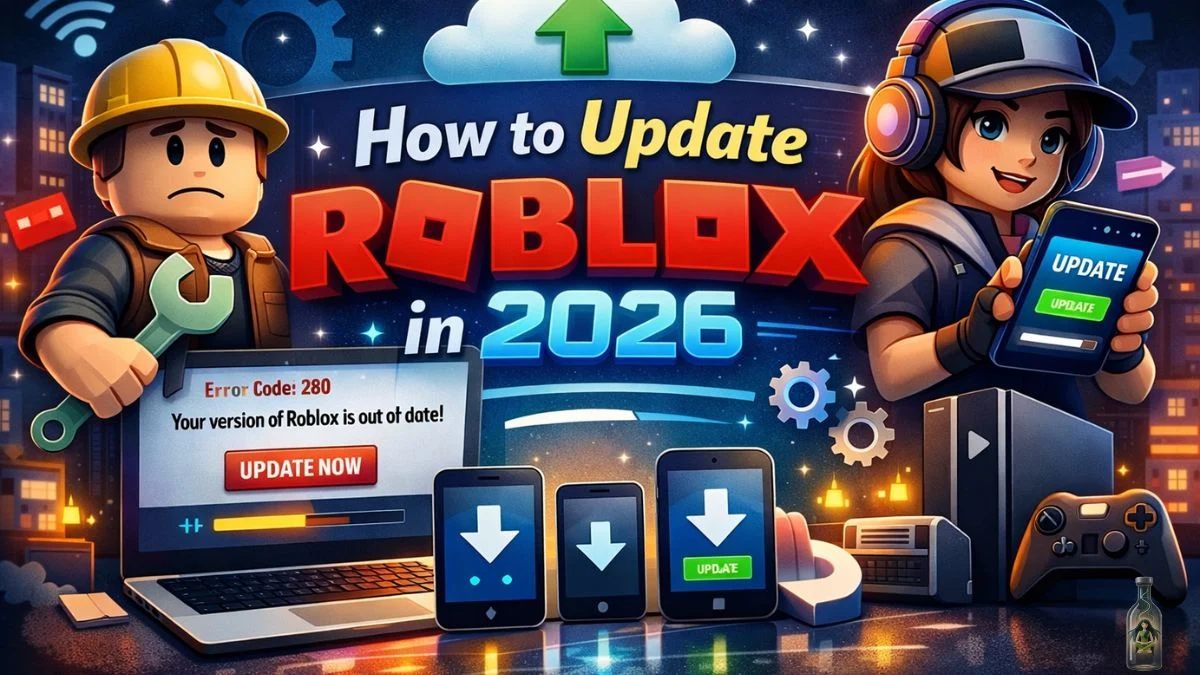

Who Is Mgigi203 On Roblox And What Are They Doing In 2026 . A Mother Or Father S Information To Utilizing Roblox In 2026 Ivugangingo 2026 Parental Guide For Roblox Usage UnicMinds . Roblox New Years 2026 Poster By SmashLeaker On DeviantArt Roblox New Years 2026 Poster By Smashleaker Dl7cn62 Fullview . How To Update Roblox In 2026 Fix Error Code 280 On PC Mobile Xbox Roblox Update It.webp. How To Publish A Game On Roblox In 2026 Roblox YouTube


Roblox New 2026 Logo Roblox Reels Humbled Gamer Facebook Media. ROBLOX IN 2026 YouTube Hqdefault . Like And Subscribe If U Want The Roblox Logo 2026 Will Be That Oar2 . Exploring Meaxico Roblox Fun What Awaits You In 2026 Oar2 . ROBLOX VAI MUDAR DE LOGO EM 2026 YouTube





Roblox 2026 New Logo REVEAL First Look At The Future Shorts YouTube Oar2 . How To Message On Roblox 2026 A Quick Guide . Roblox In 2026 Play On Roblox NoFilter. ROBLOX GAMES 2026 Tier List Community Rankings TierMaker . What Is Broack Roblox And Why Is It Trending In 2026


Roblox DBZ Decals What Are They For 2026 Maxres2 . Roblox 2026 Logo Evolve YouTube Oardefault . How Many Games Are On Roblox 2026 Updated Image. Prepare For 2026 With Roblox Trends TikTok Img. Roblox 2026 Generative AI Ekonomi Kreator Dan Dominasi Roblox Generative Ai Ekonomi Kreator Metaverse 2026 Cover 2r4KC4.webp


Roblox At GDC 2026 Where To Find Us All Week Roblox. Roblox Logo 2026 PNG Transparent Images Free Download Vector Files Pngtree Pink Colour 2026 Png Image 15832637 . Roblox 2026 Logo Icons Free Download In SVG PNG Roblox Icon Svg Download Png 5345585 . Roblox The Movie 2026 IMDb V1 FMjpg UX1000 . Todo Sobre Juegos De Roblox En 2026 TikTok Img


100 Unofficial Roblox Annual 2026 Book Com 100 Unofficial Roblox Annual 2026. Nuevo Logo De Roblox 2026 C Mo Ser TikTok Img. 2026 Roblox OZON 1418378981 8307756061 . Best Roblox VPN 2026 Security And Unlimited Access For Players VPN Roblox 2026 Terbaik Melindungi Privasi Dan Akses Tanpa Batas 3756ba1bbf